
Introduction
Globally, about a third of food production for human consumption (~1,300 million tons) is lost or wasted each year (1). Despite high amounts of food being lost or wasted, 10.5% of the population worldwide (~828 million people) are undernourished (2). According to the United Nations, food security implies having permanent physical and economic access to sufficient healthy and safe food that meets the population's food preferences and dietary needs for an active and healthy life (2). Food insecurity is characterised by poor diet quality, including a low intake of fruits and vegetables (3). Thus, achieving Sustainable Development Goal 2 (SDG 2.1) ensuring access to healthy and nutritious food by all, is a challenge in providing access to fruits and vegetables.
Fruits and vegetables are a valuable nutritional source, characterised by the high dietary fibre, vitamin C, and potassium content associated with health benefits. The World Health Organization (WHO) and worldwide dietary guidelines recommend the daily intake of at least 5 servings of fruits and vegetables (~ 400 g for adults) (4). Dietary patterns high in fruits and vegetables have consistently been identified as protective against cardiovascular disease and premature mortality (5). Nevertheless, worldwide consumption of fruits and vegetables is far from recommended; 78% of the population (mostly from low-and middle-income countries - LMICs) do not meet the recommended daily intake of at least 5 servings of fruits and vegetables (6). Populations among LMICs present a lower daily vegetable intake than high-income countries, reaching a mean of 1-2 servings of vegetables (7). Chile is no exception to this pattern, with only 15% of the population meeting the 5-a-day fruit and vegetable recommendation and a mean of 1 serving of fruits and 2 of vegetables (8).
Sustainable Development Goal 12.5, substantially reducing waste generation through prevention and reduction, recycling, and reuse is relevant, particularly in food-producer countries where food availability coexists with food-insecure populations. In this context, waste management and food recovery hierarchies recommend source reduction and feed hungry people as the most preferred actions from an environmental perspective. This emphasis on reducing food loss and waste (FLW) addresses not only economic and social issues but also have significant environmental implications. Fruits and vegetables are the food groups that generate the most FLW; ~35-55% of fruit and vegetable production being lost or wasted along the food supply chain, with the highest percentage occurring in Latin America (1).
Previous research has demonstrated that redistributing fruits and vegetables from a wholesale market and donation to homeless shelters reduces food waste and can improve access to these foods in Chile (9). Soup kitchens, which rely heavily on food donations, can improve dietary quality among beneficiaries through the redistribution of fruits and vegetables (10). As such, soup kitchens provide a vital coping strategy for counteracting food insecurity while also fostering social networks (11). A study among Brazilian soup kitchen beneficiaries revealed a desire to consume more fruits and vegetables; however, due to low income, many opt for low-nutrient, energy-dense foods due to their greater affordability (12). Thus, soup kitchens have the potential to significantly improve the dietary quality of their beneficiaries. Nevertheless, there is currently no evidence regarding the impact of this access on the actual intake of fruits and vegetables among food-insecure individuals, such as those relying on shelters and soup kitchens.
To our knowledge, there is scarce information on the management of fruits and vegetables redistributed through donations to soup kitchens, and no data is available about the consumption of these foods by beneficiaries in Chile. Herein, this study aims to evaluate fruit and vegetable consumption among soup kitchen beneficiaries, considering their sociodemographic characteristics and the frequency of fruit and vegetable donations to soup kitchens. Specifically, this research focuses on evaluating the consumption of fruits and vegetables among beneficiaries of soup kitchens in the Metropolitan region of Chile. We compare the fruit and vegetable intake (servings/day) between beneficiaries of soup kitchens receiving scheduled (SD) vs. non-scheduled donations (NSD). Additionally, we examined the compliance with the 5-a-day recommendation with various sociodemographic factors.
Material and methods
Area of study
Chilean production of fruits and vegetables involves 2.2 million tons and 6.7 million tons, respectively (13). In 2020, the domestic supply of fruits represented 203 g/day and 112 kcal/day per capita. Regarding vegetables, the domestic supply quantity represented 201 g/day and 68 kcal/day per capita. The Metropolitan region leads the national production of fruits and vegetables, upholding 15.9% and 27.9% of the national horticultural area, respectively. Various fruits and vegetables are available all year round, where the high coverage of fresh food markets (i.e., 415 markets in the Metropolitan region) favours physical and economic access to fruits and vegetables (14).
The Metropolitan region (33º 26' South Latitude; 70°39' and 71°43' West Longitude) is located in Central Chile (Figure 1). The Metropolitan region concentrates 40.5% of the Chilean population (7.112.808 inhabitants); 48.7% are male, and 51.3% are female (15). In 2017, 11.4% of the Chilean population was >65 years old, and 8.4% of the national elderly population was concentrated in the Metropolitan region (15). The prevalence of undernourishment is 2.6%, whereas the prevalence of obesity in the adult population is 28% (2). Poverty by income is estimated at 6.5% nationally, and 4.4% in the metropolitan region, with a larger concentration within women (6.9%), indigenous (8.8%) and migrant (11.1%) populations (16).
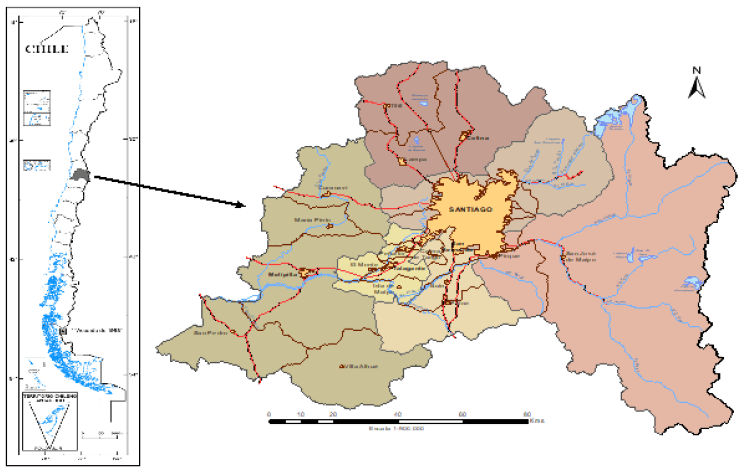
Figure 1. Area of study. Metropolitan region (Santiago, capital). Source: ODEPA
Study design
Observational cross-sectional study, including eight soup kitchens in Chile's Metropolitan region. We considered a soup kitchen a food service outlet preparing and serving meals for immediate consumption (17). The STROBE-nut checklist guided study reporting (18).
Soup kitchens were associated with a Catholic institution. This institution provided a register of 106 soup kitchens located in the Metropolitan region. The inclusion criteria for the study were soup kitchens that delivered food at least 3 days per week. Preliminarily, 50 soup kitchens met the inclusion criteria. A telephone call was made to the soup kitchen manager, who validated the inclusion criteria. A standard answer was that "they were not working because of a lack of resources or volunteers." After this validation, we invited all 22 soup kitchens that met the inclusion criteria, and eight agreed to participate. All of the soup kitchens receive adults (>18 years old) as beneficiaries.
We studied food redistribution and donation as a method of food waste management. A standard model of management of fruits and vegetables received through donations in soup kitchens is detailed in Figure 2. The soup kitchen manager and volunteers coordinate the reception of donations. Then volunteers are responsible for handling and storage, preparation of meals, and food service outlet. Most beneficiaries consume their meals at soup kitchens, and occasionally, they have take-away boxes to be consumed outside. When there is an excess of fruit donations, these foods are made available before consumption both inside and outside of soup kitchens.

Figure 2. Model of management of fruits and vegetables received through donations in soup kitchens.
The frequency of donations distinguishes between soup kitchens that receive SD and NSD donations. SD soup kitchens receive donations weekly, while NSD soup kitchens receive them monthly. Three soup kitchens were assigned to the SD group; and five were assigned to the NSD group. The main characteristics of soup kitchens are detailed in Table 1.
Table 1. Characteristics of soup kitchens
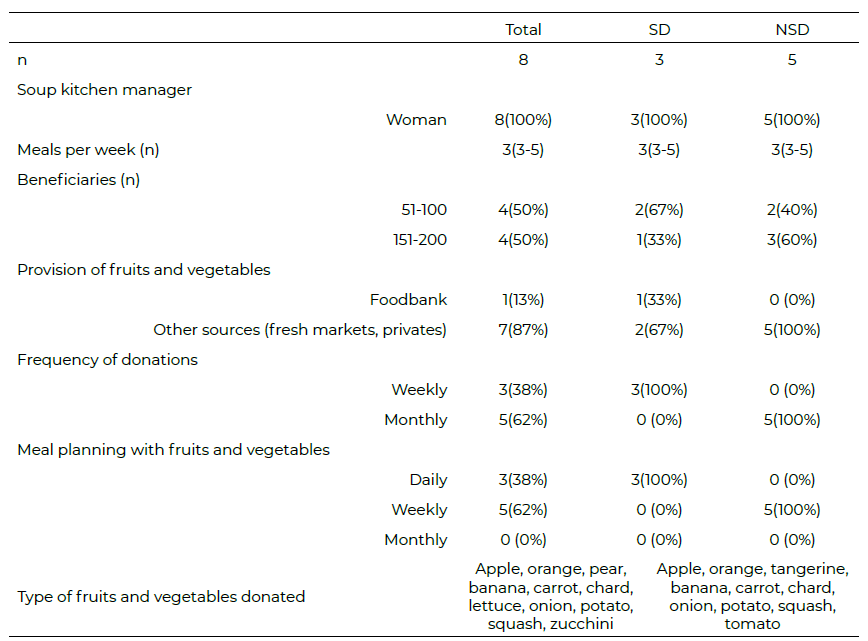
S.D., scheduled, and NSD, non-scheduled donations. Continuous variables are expressed as median (25th percentile–75th percentile). Categorical variables are expressed as frequency (percentage).
Structured face-to-face survey applied to beneficiaries
The inclusion criteria for selecting the participants were beneficiaries who a) had >18 years old, b) attended soup kitchens at least one day per week, and c) were able to read and sign an informed consent. Participants were recruited at the headquarters of each soup kitchen on a date and time agreed upon with the kitchen staff. Participation was entirely voluntary, and no monetary incentives were provided. Before administering the survey application, the informed consent form was read aloud to each participant, who was then asked to sign it. This study received ethical approval from the Social Sciences Ethical Committee at the Pontificia Universidad Católica de Chile (ID 220606011).
A structured face-to-face survey was applied by the research team. The survey consisted of two sections. Alongside these two sections, beneficiaries were given the opportunity to provide open-ended comments about attitudes towards fruit and vegetable consumption and their experience with the soup kitchen. The first section focused on sociodemographic characteristics and included questions about age, sex, anthropometric measures (i.e., weight and self-reported height), country of birth, household characteristics, monthly income, and educational level. Additionally, there were two questions regarding the frequency of attendance at soup kitchens.
The second section employed a food frequency questionnaire (FFQ) that assessed the consumption frequency (n/week) of fruits and vegetables, as well as their quantification in standardized servings (n/day), following the methodology of the Chilean National Health Survey (8). This meant that each person reported the number of days per week that they consumed fruits and vegetables. Then, the person recognised the number of servings of fruits and vegetables that were consumed in a reference day, using illustrations of servings. Thus, the intake could not only come from the meals provided by the soup kitchens. The number of servings (n/day) was calculated by multiplying the reference number of servings by the frequency of consumption over 7 days. Results of meeting the recommendation of ≥5 servings of fruit or vegetables per day were reported as the frequency of beneficiaries who met the recommended intake.
Sample size
Considering the availability of beneficiaries for interviews during the data collection period from September to November 2022, we assessed the sample sizes for each group (SD=44 and NSD=43). To calculate the sensitivity to detect differences between the groups, we used G*Power software version 3.1. With these sample sizes, the Mann-Whitney U test, an of 5%, and a ß of 20%, we were able to detect an effect size of 0.6076.
Data analysis
Considering the small sample size, non-parametric analyses were used. Data for continuous variables were presented as median [25th percentile – 75th percentile]. Mann-Whitney U test was used to compare n/day of fruits, n/day of vegetables, and n/ day of fruits and vegetables between groups (SD, NSD). Logistic regression was used to estimate crude and adjusted odds ratios (95% confidence intervals) for beneficiaries who met the 5-day recommendation. In model 2, odds ratios were adjusted for sociodemographic and anthropometric characteristics (gender, age, education, residence, income, and BMI). In model 3, odds ratios were also adjusted by type of donation. Prism Statistics version 10.0.3 (217) was used for analyses, considering a P-value <0.05 as statistically significant.
Results
Characteristics beneficiaries
Table 2 shows the beneficiaries' main sociodemographic, anthropometric, and food intake characteristics. Participants were mostly men (64%); half of them were 57 years old or older, and more than half had overweight or obesity (51%). Most participants were born in Chile (91%), had an incomplete secondary educational level (63%), 34% were individuals experiencing homelessness, and 41% had no income. No significant differences in these characteristics were reported among beneficiaries attending SD vs. NSD soup kitchens.
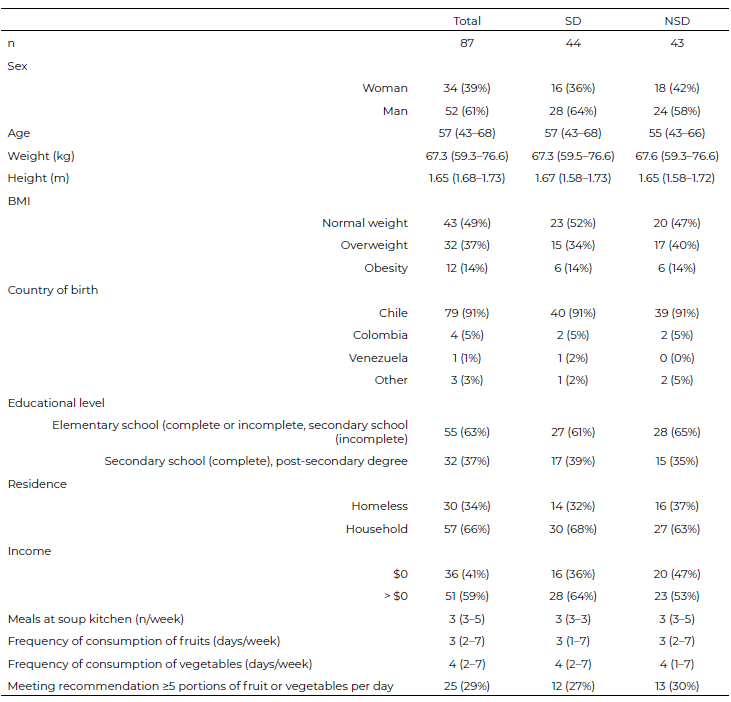
S.D., scheduled, and NSD, non-scheduled donations. Continuous variables are expressed as median (25th percentile–75th percentile). Categorical variables are expressed as frequency (%).
Regarding food intake, half of the participants reported having at least 3 meals per week at the soup kitchen, had fruits in 3 and vegetables on 4 days a week, and nearly 30% met the dietary recommendation of 5 fruits and vegetables per day. No differences were reported across schedule-type soup kitchen groups.
The groups of soup kitchens had no difference in fruit and vegetable intake (Figure 3). Fruit intake (median [percentile 25 – percentile 75]) for beneficiaries attending SD was 2 [1 – 3] servings/ day, and for NSD was 1 [0 – 2] servings/day (p=0.1567). Vegetable intake for beneficiaries attending SD and NSD was 1 [0 – 2] servings/day (p=0.7141). In total, beneficiaries attending SD and NSD had a similar fruit and vegetable intake (3 [1 – 5] servings/day vs. 2 [1 – 5] servings/day; p=0.3203).
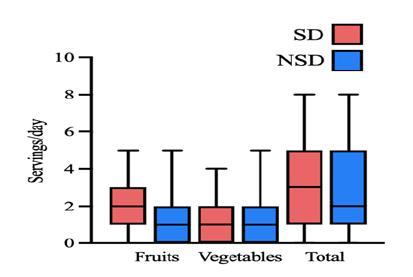
Figure 3. Fruit and vegetable intake. Boxes represent the 25th and 75th percentiles, with a horizontal line denoting the median; whiskers denote the minimum and maximum values. SD, soup kitchens that receive scheduled donation; NSD, soup kitchens that did not receive scheduled donation.
Meeting fruit and vegetable guidelines (5-a-day)
Compliance with 5-a-day recommendation varies according to sociodemographic characteristics (Table 3). Women had more than 4 times higher chances to meet the recommendation than men. Meanwhile, increases in age decreased the odds of meeting the 5-a-day recommendation. Receiving an income also increased the odds by 4 times compared to participants not receiving any income. On the other hand, the type of donation was not significantly associated with the chances of meeting the fruit-and-vegetable dietary recommendation.
Table 3. Odds ratio (95% confidence interval (CI)) for participants who met the dietary guidelines of 5 servings of fruits and vegetables per day.
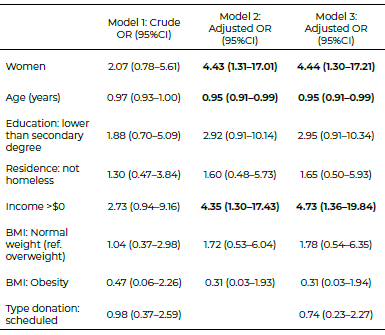
Models 2 and 3 were adjusted for all sociodemographic and anthropometric characteristics listed above, and Model 3 was also adjusted by type of donation. Statistically significant odds ratios (p<0.05) are marked in bold. OR: Odds ratio; CI: Confidence Interval.
Open-ended survey comments revealed that some beneficiaries wished to increase their fruit and vegetable intake. Some barriers mentioned included relatively high cost, limited variety, lack of cooking options, or difficulty accessing fruits and vegetables outside the soup kitchen. These insights highlight the importance of donation quality and meal planning in shaping consumption behaviours.
Discussion
Food redistribution and donation are worthwhile efforts, as fresh fruits and vegetables play a crucial role in enhancing the nutritional quality of food aid donations (19). Our study aimed to assess fruit and vegetable consumption among beneficiaries receiving redistributed fruits and vegetables through a face-to-face survey, which included sociodemographic and anthropometric data, and a FFQ. We interviewed 87 beneficiaries attending eight soup kitchens in Santiago, Chile. Our results revealed that 29% of the beneficiaries met the 5-a-day fruit and vegetable recommendation, with a median intake of 2 servings for fruits and 1 for vegetables, respectively. Compliance with this guideline varied according to sex, age, and income. However, the type of donation did not significantly affect the likelihood of meeting the 5-a-day recommendation. These findings indicate that the sociodemographic characteristics of soup kitchen beneficiaries are associated with variations in fruit and vegetable consumption.
Notably, our findings showed that the percentage of beneficiaries meeting the 5-a-day recommendation was higher than that reported for Chilean adults and the global adult population (29%, 15%, and 22%, respectively) (6,8). Strong evidence from systematic reviews suggests that fruit and vegetable consumption among adults in Chile and other countries is socially patterned, with lower socioeconomic groups reporting lower intakes and less healthy dietary patterns when compared to their higher counterparts (20–24). The relatively higher consumption of fruits and vegetables among our beneficiaries may be attributed to an improved physical and economic access to these foods, resulting from the soup kitchens' capacity to receive donations and manage fresh fruits and vegetables (Figure 2). However, other factors—such as individual preferences, external food sources, or seasonal availability—may also contribute to these consumption patterns. These findings suggest that food redistribution and donation efforts may play a role in facilitating access to fruits and vegetables, supporting a previous study on redistributing and donating fruits and vegetables among food-insecure individuals in Chile (9). Yet, further research is needed to understand the extent of their influence relative to other determinants.
Food redistribution and donation avoid food waste in landfills and the consequent emission of greenhouse gases. This is particularly relevant in Chile, where fruits and vegetables are the food groups that produce the most FLW (25). If we consider that participants reported at least 3 meals per week at the soup kitchen and the consumption of fruits and vegetables 3 days a week, with a median of servings of 2 and 1 for fruits and vegetables, we could estimate the number of fruits and vegetables consumed in a standard soup kitchen that receives 150 beneficiaries. With these estimations, a standard soup kitchen supports consuming 70,200 servings/year of fruits and vegetables, avoiding the waste of 5,616 kg/year of fruits and vegetables. Fruits or vegetables disposed of at a landfill produce an emission of 1.5 tons CO2 equivalent per ton (26). Thus, a standard soup kitchen could contribute to mitigating emissions of 8.4 tons of CO2 equivalent per year, highlighting the environmental impact of food redistribution and donation to soup kitchens as a food waste management method.
In our study, attitudes of the beneficiaries towards fruits and vegetables denoted interest in increasing their consumption, echoing similar findings from a study conducted in Brazil (12). Our participants also mentioned deploying other strategies to enhance their access to these foods, such as purchasing and recovering fruits and vegetables from fresh and wholesale markets. Evidence from another Chilean study found that food-insecure households tend to buy fewer fruits and vegetables when compared to their food-secure counterparts, indicating economic barriers that limit a steady and varied supply (27). Nevertheless, participants recovering food from fresh food markets may not always adhere to safety standards regarding what is considered safe for consumption (28). Recommendations emphasize the importance of food service outlets in implementing food safety regulations to ensure safe food practices when dealing with recovered foods (29). To address this, food recovery efforts could benefit from the collective knowledge and expertise of the soup kitchens to identify which food is safe for consumption.
Our study highlighted the need for the redistribution and donation of fruits and vegetables to soup kitchens to be accompanied by interventions aimed at improving consumption. Understanding the redistribution and donation strategies is essential for effective meal planning and utilization of donated foods in soup kitchens. Effective donation strategies should ensure that soup kitchens receive a diverse range of perishable foods and that the specific needs of their beneficiaries are considered in meal planning (30). Such interventions should enhance both physical and economic access while also addressing personal factors (i.e., motivations and barriers) (31). It is essential that these initiatives reinforce understanding of the 5-a-day recommendation, emphasizing the organoleptic properties of fruits and vegetables as well as serving sizes and quantities, while promoting sustainable practices.
Strengths and limitations
To our knowledge, this is the first study to assess the role of fruit and vegetable donations to soup kitchens beneficiaries' consumption in Chile. Despite not finding a significant association between the scheduled donation regime and fruit and vegetable intakes, our findings identified that sociodemographic characteristics significantly influence consumption among beneficiaries, regardless of the donation structure. The lack of statistical association between fruit and vegetable donation regimes and intakes can be related to the distinction between SD and NSD, which relied upon self-reported data from soup kitchen volunteers. Soup kitchens often operate on a continuum between SD and NSD, receiving mostly scheduled donations while also being open to receiving non-scheduled donations if available.
Our ability to draw firm conclusions regarding the relationship between the donation regime and fruit and vegetable intakes was limited by the small sample size of soup kitchens and participants who met our inclusion criteria. Despite efforts to include more soup kitchens—such as outreach through dissemination via community managers and visits- many were not operating the required number of days to qualify for our study. In Chile, the absence of an updated list of operating soup kitchens made it necessary to collaborate with a prominent Catholic beneficiary organization, which manages the largest number of soup kitchens in the country.
Comparison with previous studies of fruit and vegetable consumption among soup kitchen beneficiaries in other settings may be influenced by differences in sociodemographic and anthropometric characteristics within our sample. Most of our participants were Chileans (91%), adults (median age: 57), living at home (66%), received some sort of income (60%), and a high proportion had at least completed secondary education (37%). In contrast, studies conducted in Brazil and the United States reported a higher proportion of migrants, older adults, and people experiencing homelessness among soup kitchens beneficiaries (12,32,33). However, anthropometrical characteristics in our study aligned with other research on food-insecure populations, with approximately 51% of beneficiaries being classified as overweight or obese. Food insecurity has been associated not only with undernourishment but also with overweight and obesity; indeed, FAO et al. (2) reported a global trend of increasing obesity prevalence among food-insecure adults. Although anthropometric assessment was not the main focus of this study, the high prevalence of self-reported overweight and obesity among beneficiaries is notable. These findings highlight the coexistence of food insecurity and excess weight in vulnerable populations. As weight and height were self-reported, potential bias due to misreporting should be considered. Nonetheless, these data offer initial insight into the nutritional status of this group and underscore the need for integrated public health approaches.
A final limitation is the potential for misreporting dietary intakes using FFQ due to social desirability bias. Previous research has suggested that women and individuals with lower education levels are more likely to misreport energy intake, often in an effort to align their intake with dietary guidelines, such as the 5-day recommendations for fruits and vegetables (34,35). Further studies should consider the reliability of dietary intake data collection methods appropriate for the population under study and compare this information with other supplemental methods, such as tracking quantities of food purchases and donations (36). Additionally, implementing strategies to minimize bias in dietary reporting, including clear instructions and the use of memory aids, can help alleviate the cognitive burdens and respondent fatigue, ultimately enhancing the reliability of the FFQ (37). Despite these limitations, our study relied upon the best culturally adapted FFQ available, proving to be time-efficient, cost-effective, and valuable for straightforward comparison with national data collected by the National Health Survey (8).
Conclusions
This research highlights the social and nutritional impact of food redistribution and donation to soup kitchens. These initiatives contribute to improving access to fruits and vegetables among food-insecure individuals in the Metropolitan Region of Chile.
Despite these efforts, 7 out of 10 beneficiaries did not meet the 5-a-day fruit and vegetable recommendation, indicating room for improvement. Although the type of donation was not significantly associated with meeting dietary recommendations, sociodemographic factors such as sex, age, and income were relevant in shaping consumption patterns.
Findings suggest that food redistribution strategies should be complemented by interventions addressing the social determinants of dietary intake, promoting both physical and economic access to healthy and nutritious foods. Additionally, the environmental potential of these initiatives is highlighted through their contribution to reducing food waste and its associated impacts.
Future research should incorporate larger samples and complementary methods to assess dietary intake, thereby strengthening the evidence base and informing public policies that promote healthy and sustainable diets in food-insecure contexts.
Acknowledgments
The authors sincerely thank Carmen Gloria Ortega and José Torrealba from Proyecto Común, Pastoral U.C., for contributing as a link with a Catholic institution and its soup kitchens. The authors also appreciate soup kitchen volunteers' valuable time sharing their knowledge and experience.
Conflict of Interest
The authors declare no competing interests.
References
- Gustavsson J, Cederberg C, Sonesson U, Otterdijk V, Meybeck A. Global food losses and food waste. Rome; 2011.
- FAO, IFAD, UNICEF, WFP, WHO. The State of Food Security and Nutrition in the World 2022. Rome: FAO; 2022. https://doi.org/10.4060/cc0639en
- Hanson KL, Connor LM. Food insecurity and dietary quality in US adults and children: a systematic review. Am J Clin Nutr. 2014;100(2):684–692. https://doi.org/10.3945/ajcn.114.084525
- WHO and FAO. Diet, Nutrition, and the Prevention of Chronic Diseases (Report of a joint WHO and FAO Expert Consulation). WHO Tech Rep Ser. 2003;916.
- Fulton SL, McKinley MC, Young IS, Cardwell CR, Woodside J V. The Effect of Increasing Fruit and Vegetable Consumption on Overall Diet: A Systematic Review and Meta-analysis. Crit Rev Food Sci Nutr. 2016;56(5):802–816. https://doi.org/10.1080/10408398.2012.727917
- Hall JN, Moore S, Harper SB, Lynch JW. Global Variability in Fruit and Vegetable Consumption. Am J Prev Med. 2009;36(5):402-409.E5. http://doi.org/10.1016/j.amepre.2009.01.029
- Kalmpourtzidou A, Eilander A, Talsma EF. Global Vegetable Intake and Supply Compared to Recommendations: A Systematic Review. Nutrients. 2020;12(6):1558. https://doi.org/10.3390/nu12061558
- MINSAL. Encuesta Nacional de Salud 2016-2017 Primeros resultados [Internet]. Departamento de Epidemiología, División de Planificación Sanitaria, Subsecretaría de Salud Pública. 2017.
- Fredes C, García F, Pérez MI, Fernández-Verdejo R. Exploring Fruit and Vegetable Waste in Homeless Shelters that Receive Surplus Donation from a Wholesale Market in Chile. Sustainability. 2020;12(21):8835. https://doi.org/10.3390/su12218835
- Koh KA, Bharel M, Henderson DC. Nutrition for homeless populations: shelters and soup kitchens as opportunities for intervention. Public Health Nutr. 2016;19(7):1312–1314. https://doi.org/10.1017/S1368980015002682
- Tam B, Findlay L, Kohen D. Social Networks as a Coping Strategy for Food Insecurity and Hunger for Young Aboriginal and Canadian Children. Societies. 2014;4(3):463–676. https://doi.org/10.3390/soc4030463
- Bento IC, Sobrinho FM, Abreu MNS, Gazzinelli MF, Pereira SCL. Soup kitchen users’ social representations of healthy eating associated with their household food security status. Rev Nutr. 2016;29(2):229–240. https://doi.org/10.1590/1678-98652016000200007
- FAO. FAOSTAT. Food balances (2010-). 2023. http://www.fao.org/faostat/es/#data/FBS
- Carreño P, Silva A. Fruit and vegetable expenditure disparities: evidence from Chile. Br Food J. 2019;121(6):1203–1219. https://doi.org/10.1108/BFJ-06-2018-0365
- Instituto Nacional de Estadísticas (INE). Censo 2017 - Cuadros Estadísticos. 2017. https://www.ine.cl/estadisticas/sociales/censos-de-poblacion-y-vivienda/poblacion-y-vivienda
- Ministerio de Desarrollo Social y Familia de Chile. Encuesta de Caracterización Socioeconómica Nacional (Casen) (2022). 2023. https://observatorio.ministeriodesarrollosocial.gob.cl/storage/docs/casen/2022/Presentación_Resultados_Casen_2022 _v20oct23.pdf#page=35.00
- Minaker LM, Raine KD, Cash SB. Measuring the Food Service Environment: Development and Implementation of Assessment Tools. Can J Public Heal. 2009;100(6):421–426. https://doi.org/10.1007/BF03404337
- Lachat C, Hawwash D, Ocké MC, Berg C, Forsum E, Hörnell A, et al. Strengthening the Reporting of Observational Studies in Epidemiology—Nutritional Epidemiology (STROBE-nut): An Extension of the STROBE Statement. PLOS Med. 2016;13(6):e1002036. https://doi.org/10.1371/journal.pmed.1002036
- Efrati Philip D, Baransi G, Shahar DR, Troen AM. Food-Aid Quality Correlates Positively With Diet Quality of Food Pantry Users in the Leket Israel Food Bank Collaborative. Front Nutr. 2018;5: Article123. https://doi.org/10.3389/fnut.2018.00123
- Giskes K, Avendaňo M, Brug J, Kunst AE. A systematic review of studies on socioeconomic inequalities in dietary intakes associated with weight gain and overweight/obesity conducted among European adults. Obes Rev. 2009;11(6):413–429. https://doi.org/10.1111/j.1467-789X.2009.00658.x
- Lewis M, Lee AJ. Dietary inequity? A systematic scoping review of dietary intake in low socio-economic groups compared with high socio-economic groups in Australia. Public Health Nutr. 2021;24(3):393–411. https://doi.org/10.1017/S1368980020003006
- Allen L, Williams J, Townsend N, Mikkelsen B, Roberts N, Foster C, et al. Socioeconomic status and non-communicable disease behavioural risk factors in low-income and lower-middle-income countries: a systematic review. Lancet Glob Heal. 2017;5(3):E277-E289. https://doi.org/10.1016/S2214-109X(17)30058-X
- Mayén A-L, Marques-Vidal P, Paccaud F, Bovet P, Stringhini S. Socioeconomic determinants of dietary patterns in low-and middle-income countries: a systematic review. Am J Clin Nutr. 2014;100(6):1520–1531. https://doi.org/10.3945/ajcn.114.089029
- Vega-Salas MJ, Caro P, Johnson L, Papadaki A. Socio-economic inequalities in dietary intake in Chile: a systematic review. Public Health Nutr. 2022;25(7):1819–1834. https://doi.org/10.1017/S1368980021002937
- Durán-Sandoval D, Durán-Romero G, López AM. Assessing Food Loss and Waste in Chile: Insights for Policy and Sustainable Development Goals. Resources, 2024;13(7):91. https://doi.org/10.3390/resources13070091
- Moult JA, Allan SR, Hewitt CN, Berners-Lee M. Greenhouse gas emissions of food waste disposal options for UK retailers. Food Policy. 2018;77:50–58. https://doi.org/10.1016/j.foodpol.2018.04.003
- Silva A, Von Hausen N, Magaña-Lemus D. Effect of food insecurity on food purchases at home. J Public Aff. 2019;19(3):e1852. https://doi.org/10.1002/pa.1852
- Coyne M. From Production to Destruction to Recovery: Freeganism’s Redefinition of Food Value and Circulation. Iowa JCult Stud. 2008;10(1):9–24. https://doi.org/10.17077/2168-569X.1080
- ReFED. A Roadmap to Reduce U.S. Food Waste by 20 Percent. New York City; 2016. https://refed.org/downloads/ReFED_Report_2016.pdf
- Bazerghi C, McKay FH, Dunn M. The Role of Food Banks in Addressing Food Insecurity: A Systematic Review. J. Community Health. 2016;41(4):732–740. https://doi.org/10.1007/s10900-015-0147-5
- Gans KM, Risica PM, Keita AD, Dionne L, Mello J, Stowers KC, et al. Multilevel approaches to increase fruit and vegetable intake in low-income housing communities: final results of the ‘Live Well, Viva Bien’ cluster-randomized trial. Int J Behav Nutr Phys Act. 2018;15(1):80. https://doi.org/10.1186/s12966-018-0704-2
- Mousa TY, Freeland-Graves JH. Food security of food recipients of a food pantry and soup kitchen. Public Health Nutr. 2019;22(8):1451–1460. https://doi.org/10.1017/S1368980018003658
- Eppich S, Fernandez CP. Study finds Chapel Hill, NC, soup kitchen serves nutritious meals. J Am Diet Assoc. 2004;104(8):1284–1286. https://doi.org/10.1016/j.jada.2004.05.208
- Maurer J, Taren DL, Teixeira PJ, Thomson CA, Lohman TG, Going SB, et al. The Psychosocial and Behavioral Characteristics Related to Energy Misreporting. Nutr Rev. 2006;64(2):53–66. https://doi.org/10.1301/nr.2006.feb.53-66
- Vega-Salas MJ, Curi-Quinto K, Hidalgo-Aréstegui A, Meza-Carbajal K, Lago-Berrocal N, Arias L, et al. Development of an online food frequency questionnaire and estimation of misreporting of energy intake during the COVID-19 pandemic among young adults in Peru. Front Nutr. 2022; 9:9493301. https://doi.org/10.3389/fnut.2022.949330
- Amicarelli V, Bux C. Food waste in Italian households during the Covid-19 pandemic: a self-reporting approach. Food Secur. 2021;13(1):25–37. https://doi.org/10.1007/s12571-020-01121-z
- Willett W. Food Frequency Methods. In: Nutritional Epidemiology. Oxford University Press; 2013. https://doi.org/10.1093/acprof:oso/9780199754038.003.0005